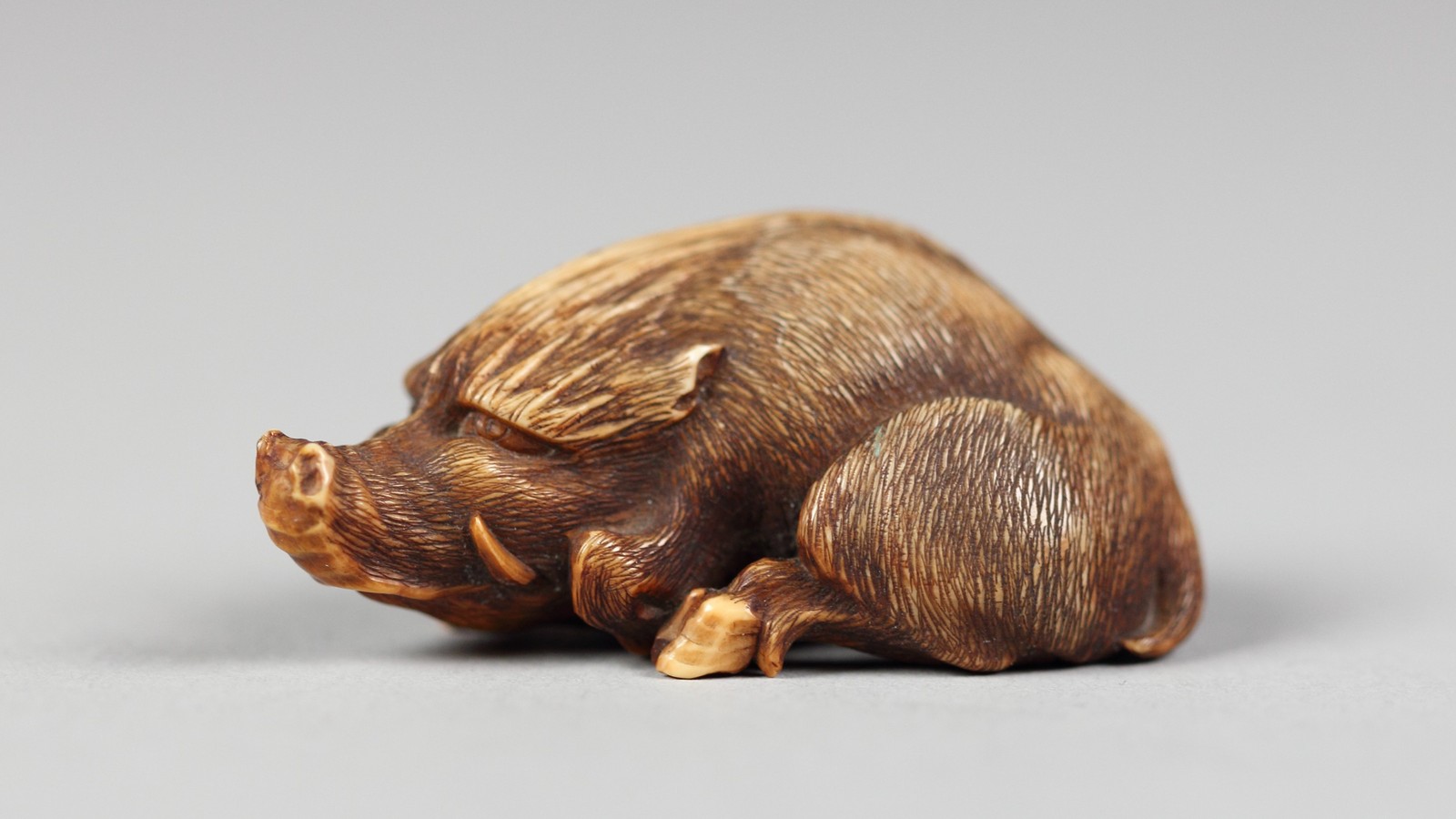
要点(約30秒)
- 1995 is yi-hai, pair 12 of the sixty: yin wood over the pig's branch, so the year is called the Wood Pig. The pair last appeared in 1935 and returns in 2055.
- Lunar New Year's Day fell on 31 January and Li Chun on 4 February at 15:12:50, which leaves a window of four days and fifteen hours where a birthday is a Pig by one reckoning and a Dog by the other.
- The lunar year held 384 days because it carried a leap eighth month, printed as 八月 twice in September and marked 閏 in the Chinese table.
- A leap month changes no animal and creates no extra month pillar: the leap eighth month ran from 25 September to 23 October, and the pillar changed from 酉 to 戌 inside it when 寒露 arrived on 9 October.
- 1995's four-day window is narrow, not rare: 1994 sat at six days, 1996 at fifteen, and 1992 at zero.
1995 is yi-hai, pair 12 of the sixty
1995 carries the pair 乙亥: yi, the second of the ten stems, over hai, the twelfth of the twelve branches. The two cycles advance one step a year, ten and twelve, and meet again after sixty — which places 1995 at position 12. The same pair stood over 1935 and will stand over 2055, and the calendar repeats with it.
The year's popular name comes from the stem. Yi is yin wood, so 1995 is the Wood Pig; hai is the pig, and the branch itself belongs to water. The two statements do not compete: one names the stem and one names the branch, and a year pillar in a chart carries both. The sixty-year table adds a third naming layer, the nayin, which calls 乙亥 fire on the mountain. That is a second label over the same pair, not a fourth opinion about the element — when a page calls 1995 a fire year, it is quoting the nayin and not the chart.
| Item | 1995 |
|---|---|
| Pair | 乙亥 (yi-hai), position 12 of 60 |
| Stem and branch | yin wood over the pig's water branch |
| Lunar New Year's Day | 31 January 1995 |
| Li Chun | 4 February 1995, 15:12:50 (UTC+8) |
| Distance between the two | four days, Li Chun later |
| Length of the lunar year | 384 days, thirteen months |
| Leap month | the eighth, starting 25 September 1995 |
Four days and fifteen hours where the calendars disagree
Every year page has to answer the same question, because two calendars disagree about where the year turns. The calendar the state prints turns at Lunar New Year's Day; the calendar a chart reads turns at Li Chun. In most years the two are days or weeks apart, and a February birthday can land on either side.
In 1995 the first line came early and the second did not. Lunar New Year's Day fell on 31 January. Li Chun arrived on 4 February at 15:12:50. A birth between midnight on 31 January and that instant is a Pig by the lunar new year and still a Dog by the solar term — the whole disagreement is four days and fifteen hours wide, and it closes mid-afternoon on 4 February rather than at midnight.
| Birthday in 1995 | By Lunar New Year | By Li Chun |
|---|---|---|
| 29 January | Dog | Dog |
| 30 January | Dog | Dog |
| 31 January | Pig | Dog |
| 1 February | Pig | Dog |
| 2 February | Pig | Dog |
| 3 February | Pig | Dog |
| 4 February | Pig | Dog until 15:12:50 |
| 5 February | Pig | Pig |
| 6 February | Pig | Pig |
The width is a property of the year, not of the method. 1994 opened the same gap at six days, 1996 pushed it to fifteen, 1997 pulled it back to three, and in 1992 it closed to zero. Reading one year and generalising is how people end up believing that the two calendars always differ by about a fortnight — see the year-boundary table for every year from 1901 to 2100.
Why 1995 has two eighth months
The Observatory's table prints 八月 on 26 August 1995 and then 八月 again on 25 September. The English edition simply repeats the ordinal; the Chinese edition marks the second one 閏八月. 九月 follows on 24 October. Thirteen month starts, 384 days in the lunar year, and one of them a repeat of the eighth.
That repeat is what keeps a lunar calendar tied to the seasons. Twelve lunar months run about 354 days, eleven short of a solar year, so a thirteenth month is inserted seven times in nineteen years. The insertion is not scheduled in advance: it is placed in the month that contains no 中气, one of the twelve solar terms that mark the middle of a solar month. That is why the leap month lands in a different position each time.
| Lunar year | Leap eighth month begins | Gap from the previous one |
|---|---|---|
| 1957 | 24 September 1957 | — |
| 1976 | 24 September 1976 | 19 years |
| 1995 | 25 September 1995 | 19 years |
| 2052 | 23 September 2052 | 57 years |
| 2071 | 24 September 2071 | 19 years |
| 2090 | 24 September 2090 | 19 years |
Six times in the 199 complete lunar years from 1901 to 2099, and the spacing is not even — 19, 19, 57, 19 and 19 years between them. All six begin within three days of each other, on 23, 24 or 25 September, because that is where the calendar happens to run out of step in those years. The range starts in 1901, so an earlier leap eighth month would not appear in this count.
A leap month moves no animal and gets no pillar of its own
This is the part people ask about, and the answer is that the leap month changes neither of the two things they hope it might. The leap eighth month ran from 25 September to 23 October 1995, and every day inside it is still a Pig year — the year pillar turns at Li Chun and nowhere else.
It also does not become a thirteenth month pillar. A chart's month pillar is cut by the twelve 節, not by the lunar months, and the leap month has no 節 that belongs to it. So the pillars keep advancing on schedule through it: 白露 on 8 September had already started 酉, and 寒露 on 9 October at 02:27:12 started 戌 — inside the leap month, with fifteen days of it still to run. Anyone born on 5 October 1995 sits in the leap eighth month with a 酉 month pillar; anyone born on 15 October of the same leap month sits in 戌.
What a leap month does change is how the lunar dates line up with the solar terms, and that is worth knowing if you are converting a birthday: the same lunar day lands about thirty days later in the solar year than it would in a year without the leap. The Pig's page has the branch relationships; this one stays on the calendar.
What 1995 settles and what it leaves open
A year page can settle the year pillar and nothing else. The day pillar comes from the date, the hour pillar from the time, and the month pillar from which 節 the birth falls under — none of which is in a year number. So "1995 is the Wood Pig" is true of every birthday in the year, including the four-day window where the other calendar still says Dog, because those two readings are the two conventions and both are stated here.
The reason to keep the distinction is that the neighbouring pages answer different questions. 1992 is the year where the two lines coincided, so the question disappears; 1995 is the year where one of the two lines carries a leap month, so the question changes shape. Neither tells you what a chart will say — that needs the four pillars, which is a different page.
| Question | Answered by |
|---|---|
| Which animal is 1995 | the year pillar, both conventions |
| Which animal a 1995 birthday is | the date, if it falls in the four-day window |
| Which month pillar a 1995 birthday has | the 節 it falls under, not the lunar month |
| Anything about character from the year alone | nothing on this page |
Where these numbers come from
The lunar dates are the Hong Kong Observatory's, read from the English and the Chinese editions of the 1995 conversion table and required to agree on every month start — the English one marks the leap month only by repeating the ordinal, the Chinese one with 閏. The same two-table check was run over all 199 lunar years from 1901 to 2099, which is where the six leap eighth months and the 199-year count come from.
The instant of Li Chun and of 寒露 is not from the Observatory's day-level table: it comes from the solar-term table this site computes against JPL DE421, at second resolution. Li Chun is an instant rather than a date, which is the whole reason the window in this article ends mid-afternoon on 4 February instead of at midnight. The four pillars page explains what the pillar boundaries are doing; the years chart lists the animal for every year if you only need the animal.
干支と五行を読む——無料GPTbazi is a personality map for entertainment and self-reflection. It is not medical, legal, financial, or psychological advice, and it is not a prediction of events. Calendar dates, leap months and solar-term boundaries are astronomical and official calendar facts, not readings of a person.
出典
- Hong Kong Observatory — Gregorian-Lunar Calendar Conversion Table for 1995 (the file this page reads, English edition)
- 香港天文台 — 一九九五年公曆與農曆日期對照表(中文版,闰八月在此标作「閏八月」)
- Hong Kong Observatory — Gregorian-Lunar Calendar Conversion Table (year index, 1901-2100)
- GB/T 33661-2017 《农历的编算和颁行》 — national standard record (drafted by the Purple Mountain Observatory; in force 1 September 2017)
- GPTbazi — BaZi methodology and the solar-term boundary
- GPTbazi — how sources are chosen and dated