Key takeaways (~30 sec)
- Five elements over twelve animals is 60 cells, not 72 — a stem and a branch can only share a year when they have the same parity.
- Each animal therefore carries five element forms, and each element fills exactly twelve of the 60 cells.
- Of 499 autocomplete suggestions, only 21 of the 60 cells were ever named; two animals, Goat and Rabbit, returned nothing.
- The best-attested element is Water at six cells; the worst is Fire at one, and that cell is Fire Horse, the year 2026.
- The record obeys the parity rule without exception — a page offering yin stems on yang branches has built a different 60.
Two cycles, not a multiplication table
The five elements and the twelve animals are two cycles of different lengths, and a year takes one position from each. The stem cycle runs ten long; the branch cycle runs twelve. Because both are even, a stem and a branch can only sit in the same year when they have the same parity — 甲, 丙, 戊, 庚 and 壬 take the six yang branches, 乙, 丁, 己, 辛 and 癸 the six yin ones. Two cycles keeping step meet again after sixty years, which is the length of the classical sexagenary count.
The parity rule is what makes the count five and not twelve. Each animal can only meet five stems, so each animal carries five element forms, and each element therefore fills exactly twelve of the sixty cells. That even split is arithmetic. What people actually look up is not, and the rest of this page is about the distance between the two.
The sixty cells
Read the table as twelve rows of five. Every cell is one animal paired with one element, carrying the nearest year between 1924 and 2043 that the pairing landed on; each of these combinations returns once every sixty years. A tick marks the cells with a search record, a dash the cells without one. The next section says where that record comes from.
| Animal | Wood | Fire | Earth | Metal | Water |
|---|---|---|---|---|---|
| Rat | 1984 ✔ | 1996 — | 2008 — | 2020 — | 2032 — |
| Ox | 1985 ✔ | 1997 — | 2009 — | 2021 — | 2033 — |
| Tiger | 2034 — | 1986 — | 1998 ✔ | 2010 — | 2022 ✔ |
| Rabbit | 2035 — | 1987 — | 1999 — | 2011 — | 2023 — |
| Dragon | 2024 — | 2036 — | 1988 ✔ | 2000 ✔ | 2012 — |
| Snake | 2025 — | 2037 — | 1989 ✔ | 2001 ✔ | 2013 ✔ |
| Horse | 2014 — | 2026 ✔ | 2038 — | 1990 ✔ | 2002 ✔ |
| Goat | 2015 — | 2027 — | 2039 — | 1991 — | 2003 — |
| Monkey | 2004 — | 2016 — | 2028 — | 2040 ✔ | 1992 ✔ |
| Rooster | 2005 — | 2017 — | 2029 ✔ | 2041 — | 1993 ✔ |
| Dog | 1994 ✔ | 2006 — | 2018 — | 2030 ✔ | 2042 ✔ |
| Pig | 1995 ✔ | 2007 — | 2019 ✔ | 2031 — | 2043 — |
Read it in two directions, and both directions are just the two cycles again. Across a row you get one animal's five forms — Wood Rat, Fire Rat, Earth Rat, Metal Rat, Water Rat — which is what a birth year looks like once the element is included. Down a column you get one element across all twelve animals, and there the years come in pairs ten years apart, because the stem cycle is ten long while the branch cycle is twelve. The step sideways is twelve, the step down is ten; the table's shape is the two cycles drawn against each other.
Twenty-one of the sixty have a search record
To find out which cells anyone actually asks about, this page uses a blunt instrument: Google's own autocomplete. On 2026-10-06 we took the suggestions behind two seed phrases, chinese zodiac and chinese astrology — 499 suggestions in total — and kept every one that named both an element and an animal. Nothing was inferred and nothing was added. The file and the matching rule are both listed with the sources at the bottom, so the count can be redone by anyone who wants to check it.
That produced 22 records, which collapse to 21 cells. The extra record is golden dragon — a nickname for one of the 21 rather than a cell of its own, and the last section before this one explains why. So the honest count is not sixty. It is 21 out of 60, and the other thirty-nine are empty not because they are wrong but because nobody typed them.
Two animals come up empty, and it is not spelling
The empty cells are not spread evenly. Goat and Rabbit have no record at all — not one of their five forms turned up among the 499 suggestions. The obvious explanation was checked first: in English, goat is written three ways, and the collection already folds sheep and ram into goat. Both animals still return nothing. Rabbit has no competing spelling to fold in the first place.
We are not going to invent a reason. Why one engine surfaces wood rat and never wood rabbit is a question about that engine's data, and this page cannot answer it. What can be said is narrower and still worth saying: a page that presents all sixty combinations as equally asked-about is presenting a model, not a measurement.
The arithmetic splits evenly; the record does not
Five elements over sixty cells means twelve cells each, and that is exactly what the table above shows. The twenty-one cells with a record look nothing like an even split. Water holds six of the 21. Earth and Metal hold five each, Wood four — and Fire holds one, at the bottom of the range by some distance.
That single fire cell is Fire Horse, and its year is 2026: the year this page was written in. So the best-attested element, by this measure, is six times the worst-attested. That is worth knowing before treating "the five elements" as five equal buckets of public curiosity. The arithmetic divides the grid into equal fifths. Attention does not.
The record and the arithmetic agree — which is a check, not a coincidence
Every one of the 22 records sits on a cell the parity rule allows. Not one pairs a yang stem with a yin branch, or the reverse. That is what you would expect if the collection and the rule are both sound, and it doubles as a test you can run on any other page on this subject.
If a page offers yang wood ox or yin fire tiger, it has treated the two cycles as a multiplication table — five elements times twelve animals, also sixty — but it is a different sixty. Half of its cells pair a yang stem with a yin branch and cannot occur, and half of the cells that can occur are missing from it. The count agrees and the set does not, which is precisely why a number on its own is not evidence.
Golden is a nickname, not a sixth element
One of the 22 records is golden dragon, and it is not a sixth form. Metal is the element; gold is what Metal gets called when the word is used loosely. The stem behind every Metal Dragon year is 庚 (geng) — the same one in 1940 and in 2000 — and golden dragon names that same year, not a different one sitting beside it.
Treating golden as an element of its own would give a grid of seventy-two cells, and the sexagenary cycle is sixty. Chinese does not carry the ambiguity: the third element is 金, which means metal, and 金龙 is simply Metal Dragon. The second word was made by English, not by the calendar, and this page keeps it where it belongs — as an alias.
What the table answers, and where it stops
Two questions, and both are lookups. Which element form does my birth year carry — the cell where my animal meets the element of that year. And when does that exact combination come back — sixty years later, because sixty is the length of the cycle. For the pairing side of the same twelve animals, the 144-pair chart is the other half of this reference set.
It does not answer what you are like, and the thirty-nine empty cells are not a claim that those combinations do not exist. They exist; they simply have no search record. The element on a birth year is a structural label — one of eight positions in a chart, not a temperament — and this site does not read it as one. The full chart is where the other seven positions come in, and how the five elements work covers what the element actually does there.
GPTbazi is a personality map for entertainment and self-reflection. It is not medical, legal, financial, or psychological advice, and it is not a prediction of events. This page counts search records and classifies years; it does not forecast anything for anyone.
Sources
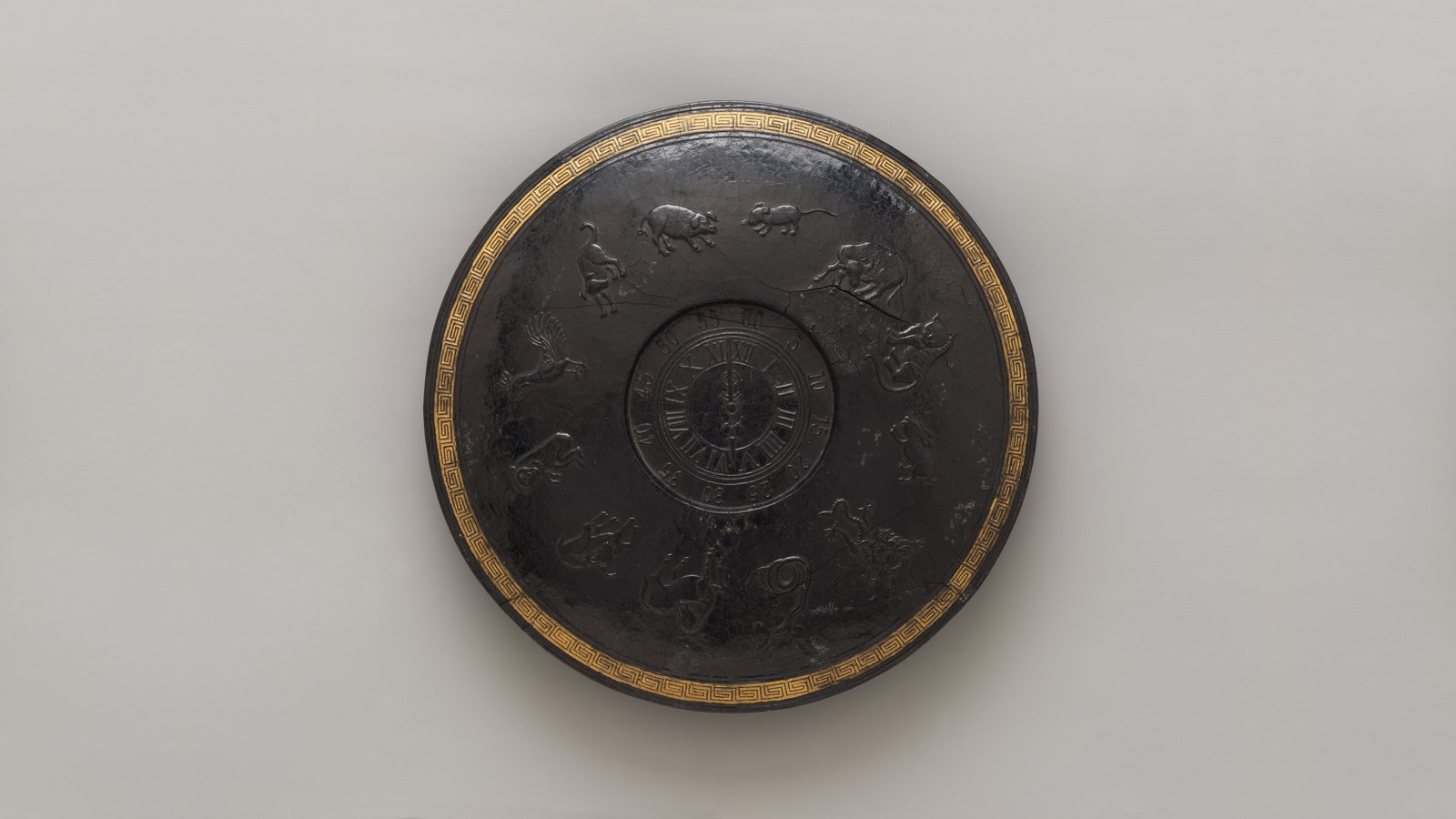
- The Metropolitan Museum of Art — Ink cake with cyclical imagery (2001.591), a Qing-dynasty ink cake carved with the twelve animals and the sexagenary characters
- Hong Kong Observatory — Gregorian-Lunar Calendar Conversion Tables (annual series, 1901 onward; the stem and branch of each year, used here to place every cell on a year)
- Hong Kong Observatory — Gregorian-Lunar Calendar Conversion Table of 2026
- Chao Wei-Pang — The Chinese Science of Fate-Calculation (Asian Ethnology, 1946; the terminology of the five elements and the sexagenary cycle)
- GPTbazi — how this site reads a chart